
In short
Roofing margin is set after the tear-off, not in the quote. Job costing attaches materials by the square, disposal, decking surprises and crew hours to the job, so the rotten deck and the extra dumpster show up as cost instead of eating the profit.
In this guide
A roofer prices by the square, orders the shingles, and does not really know the margin until the old roof is off and the deck is exposed. The estimate was reasonable. The tear-off, the disposal and the crew hours are what decide the result.
Job costing closes that gap.
Why Roofing Has a Specific Job Costing Problem
Roofing carries two costs most trades do not: heavy disposal and hidden-condition risk. You cannot see rotten decking, extra layers, or bad flashing until the tear-off, and each one adds material, labor and dumpster weight the quote never priced.
Then there is the crew. Roofing is crew-heavy and fast, so a half day of extra labor across four people is two full days of cost in an afternoon. Weather delays stretch it further.
Costed properly, the job answers itself:
| Billed | $9,800 |
|---|---|
| Shingles, underlayment, flashing | $3,100 |
| Decking replacement, 6 sheets | $310 |
| Dumpster and disposal | $520 |
| Crew, 3 at 16 hours, $30 | $1,440 |
| Your labor, 16 hours at $45 | $720 |
| Mileage and fuel | $70 |
| Job overhead allocation | $180 |
| Profit | $3,460 |
The number is real only if the decking, the second dumpster and the extra crew hours were captured while the job ran, not remembered after.
Profit Per Job, Not Per Month
Job costing records what each job earned and cost, so you know the margin on this reroof, not the blended average of a busy month.
Roofing jobs vary widely. A simple architectural-shingle tear-off on a walkable pitch is predictable. A steep, multi-layer, complex-flashing job with surprise decking is not. Averaged into a monthly P&L, the money-loser hides behind the money-makers. Per-job, you learn which pitches, materials and property types actually pay.
The Costs Roofers Need to Track
- Materials by the square. Shingles, underlayment, ice-and-water, flashing, drip edge, nails, boots. The core cost, and easy to under-order.
- Tear-off and disposal. Dumpster rental, tipping fees, the second haul you did not plan for. A large, roofing-specific cost most trades never see.
- Decking and hidden repairs. Sheets of plywood, fascia, rotten rafters found on tear-off. Job-specific and unpredictable.
- Crew hours. The biggest swing. Log each person's hours to the job the same way you log a materials receipt.
- Equipment rental. A lift, conveyor or generator for a specific job is a job cost.
- What stays in overhead. Trucks, ladders you own, insurance, licensing.
What Good Job Costing Looks Like
Capture the cost when it happens and attach it to the job in the same action. The supplier delivery and the dumpster invoice go into the job the day they land; crew hours go in at the end of each day, not the end of the month. Then the final profit is built from real numbers instead of a memory of a chaotic week.
Before you commit to a system, pressure-test the quote. The free job profit calculator turns a billed amount, your materials and your crew hours into a margin in seconds, and the job costing spreadsheet template keeps the picture across the season. For the full method, start with the complete guide to job costing and how to track job costs from receipts. Other trades: general contractors, carpenters and HVAC techs.
Job Costing and Your Taxes Are Different Jobs
Your Schedule C wants totals by category (materials, contract labor, car and truck), not by job. Job costing is a management tool that lives alongside it: the accountant uses the totals, you use the per-job margin. Scanning receipts and disposal invoices as you go means the tax substantiation is already dated and categorized. New to the terms? The job costing glossary keeps them plain.
What did that job really make?Profit and margin for any job in seconds.What VanReceipts Does for Roofing Job Costing
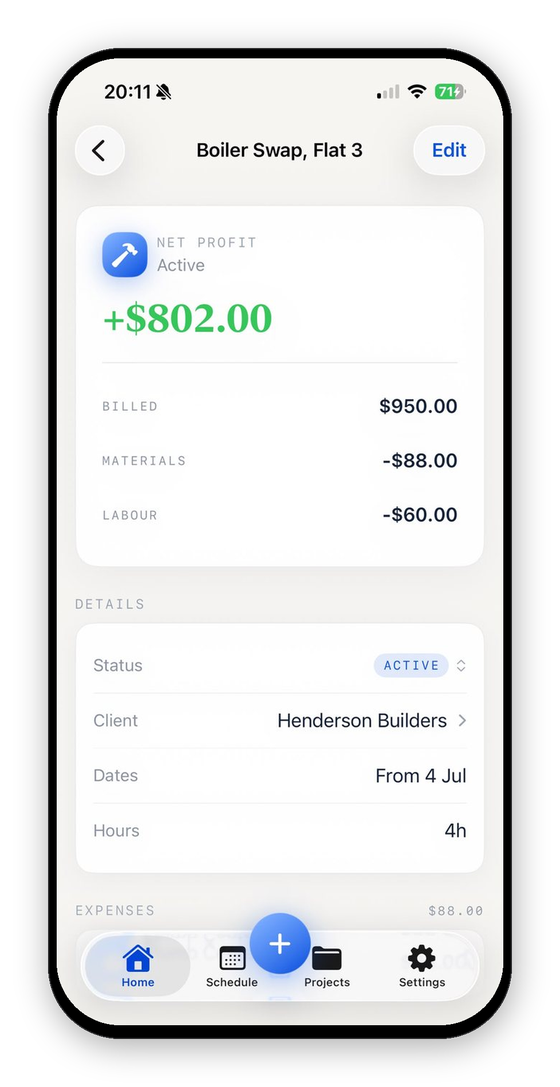
VanReceipts is an iPhone app built for the field. Scan the supplier receipt and the dumpster invoice from the truck. It reads the totals, you confirm, and you pick the job each one belongs to. Log crew hours and mileage, and the profit on the job updates live: billed, materials, disposal, crew, current net. No spreadsheet, no reconstructing a hectic tear-off week from memory.
Start With Your Next Job
Take your next reroof, capture every material and disposal cost against it, log the crew hours daily, and compare the final profit to the quote. That single comparison shows whether your per-square pricing holds once the hidden costs are counted.
Free to make and send invoices and estimates. VanReceipts lets you look around free with sample jobs, then Pro (3-day free trial on the yearly plan) adds AI estimates, card payments, scanning and your real jobs: unlimited scans, crew labor, full profit history, and iCloud sync.
When you price the next roof, start from what this one really cost. The free roofing estimate template puts the decking allowance in writing before tear-off, the roofing invoice template bills in squares, and the labor cost calculator turns crew wages into a rate that covers the hours nobody bills.
VanReceipts is an iPhone app for trade businesses: AI estimates, invoices and card payments, with receipts, mileage and hours on the same job so you can see what it made. Cloud AI drafts estimates and itemizes receipts, and you confirm everything before it saves. Free to make and send invoices and estimates. Pro is $14.99 per month or $99.99 per year, with a 3-day free trial on the yearly plan.