
In short
Landscaping profit is set by materials bought in bulk, crew hours, equipment burn and disposal, not the quote. Job costing attaches all of it to the job, so the extra yard of stone and the replacement plants show up as cost instead of eating the margin.
In this guide
A landscaper can quote an install off a drawing, order what looks like enough mulch and stone, and still finish the job unsure of the margin. The quote held. The extra yards, the crew hours, the equipment fuel and the plants that had to be replaced are what moved.
Job costing closes that gap.
Why Landscaping Has a Specific Job Costing Problem
Materials come by the cubic yard and the pallet, and it is easy to be a yard short or a yard over. Bulk soil, mulch, gravel, stone and sod all shift the cost with the delivery, not the drawing.
Then there is the burn most trades do not carry: equipment fuel and wear on mowers, skid steers and trucks, plus disposal of green waste and spoil. Crew hours run high on install days. And plants carry a quiet warranty cost: the ones that die within the season and get replaced on your dime.
Costed properly, the job answers itself:
| Billed | $6,400 |
|---|---|
| Pavers, base, sand | $1,650 |
| Plants, soil, mulch | $720 |
| Replacement plants | $90 |
| Skid steer rental and fuel | $340 |
| Crew, 2 at 20 hours, $28 | $1,120 |
| Your labor, 20 hours at $45 | $900 |
| Disposal of spoil | $180 |
| Job overhead allocation | $150 |
| Profit | $1,250 |
The number is real only if the extra yard of base, the replacement plants and the disposal were captured while the job ran.
Profit Per Job, Not Per Month
Job costing records what each job earned and cost, so you know the margin on this install, not the blended monthly total where install profit and maintenance profit hide each other.
Landscaping mixes very different work: one-off installs that are material- and equipment-heavy, and recurring maintenance that is labor- and fuel-heavy at thin margins. Averaged together, you never see which is carrying the business. Per-job, the pattern is clear: which installs pay, which maintenance routes barely break even, which designs run over.
The Costs Landscapers Need to Track
- Bulk materials by the yard and pallet. Soil, mulch, gravel, stone, pavers, sod. The swing cost, and easy to mis-order.
- Plants, and replacements. The install cost plus the ones that die and get replaced within the season.
- Equipment fuel, rental and wear. Skid steer, mini-excavator, mowers, trucks. A large, landscaping-specific cost.
- Crew hours. The biggest labor swing on install days; log each person to the job.
- Disposal. Green waste, spoil, tipping fees.
- What stays in overhead. Owned equipment, trailer, insurance, licensing.
What Good Job Costing Looks Like
Capture the cost when it happens and attach it to the job in the same action. The bulk-material delivery, the rental invoice and the disposal ticket go into the job the day they land; crew hours go in at day's end. When the install is finished, the profit is built from real numbers instead of a memory of a heavy week.
Test the quote before you build the system. The free job profit calculator turns a billed amount, your materials and your crew hours into a margin in seconds, and the job costing spreadsheet template keeps installs and maintenance separated across the season. For the full method, start with the complete guide to job costing and how to track job costs from receipts. Other trades: general contractors, carpenters and painters.
Job Costing and Your Taxes Are Different Jobs
Your Schedule C wants totals by category (supplies, contract labor, car and truck), not per-job numbers. Job costing lives alongside it: the accountant uses the totals, you use the per-job margin. Scanning receipts, rental and disposal tickets as you go means the substantiation is already dated and categorized at tax time. New to the terms? The job costing glossary keeps them plain.
What did that job really make?Profit and margin for any job in seconds.What VanReceipts Does for Landscaping Job Costing
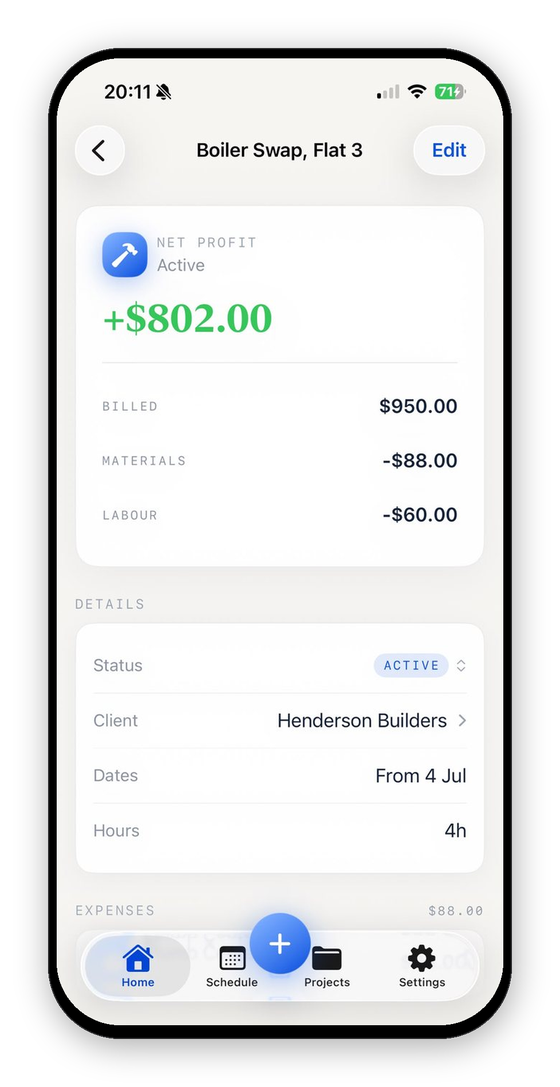
VanReceipts is an iPhone app built for the field. Scan the supply-yard receipt, the fuel slip and the disposal ticket from the truck. It reads the totals, you confirm, and you pick the job each one belongs to. Log crew hours and mileage, and the profit on the job updates live: billed, materials, equipment, crew, current net. No spreadsheet, no month-end puzzle.
Start With Your Next Job
Take your next install, capture every material, rental and disposal cost against it, log the crew hours daily, and compare the final profit to your quote. That single comparison shows whether your per-yard pricing and your maintenance routes actually pay.
Free to make and send invoices and estimates. VanReceipts lets you look around free with sample jobs, then Pro (3-day free trial on the yearly plan) adds AI estimates, card payments, scanning and your real jobs: unlimited scans, crew labor, full profit history, and iCloud sync.
Real job costs are what make maintenance prices hold up. How to price landscaping jobs works a mowing price from crew minutes and drive time, and the free landscaping estimate template, landscaping quote template, landscaping invoice template and snow removal invoice template cover the rest of the year. The bill for the visit, sent from the truck, is lawn care invoice software, listed with the other trades on trade software.
VanReceipts is an iPhone app for trade businesses: AI estimates, invoices and card payments, with receipts, mileage and hours on the same job so you can see what it made. Cloud AI drafts estimates and itemizes receipts, and you confirm everything before it saves. Free to make and send invoices and estimates. Pro is $14.99 per month or $99.99 per year, with a 3-day free trial on the yearly plan.